It’s Ok To Admit Defeat

Ok so I know that phrase, “It’s ok to not be ok” is trending, but what does it really mean? For me, it means that it’s ok to admit that I can’t do it alone anymore. It’s ok for me to get help with depression and anxiety. The more I talk about it, the more I realize how many other moms with depression and anxiety there are.

I’ve struggled off and on with depression and anxiety since I was a teenager. If you’ve been reading my blog for a while, you probably already know this. It wasn’t until the past few years, that I accepted that it’s ok to admit it though. I spent so many years wanting to help others escape the pain of depression and anxiety, but I didn’t fully face my own issues until recently.

What that looked like for me was admitting that even though I had a Master’s degree in counseling, it was still ok to need counseling myself. For so many years, I found excuses for avoiding it. I have probably made every excuse in the book.

My Excuses Were:

It costs too much.

What if someone finds out?

There aren’t any counselors that I don’t already know.

What if they think I’m crazy?

I don’t have enough time.

What if I don’t like them?

I don’t need to pay someone to tell me to do what I already know I need to do.

But let me tell you this, now that I have found a counselor that I really like and the right combination of medicine, my only regret is not starting it sooner. A friend recently said that she wished when she had her first child that someone had pushed her a little harder to start antidepressant medication. Now that she’s on it, she can see how much it’s helping her.

Another friend said that once she started taking anti-depressants she thought, “Wow, is this how good everyone else feels? I had no idea how depressed I was before!”

Moms with depression can feel too overwhelmed to get help.

I know how hard it is to get yourself out of bed some days. Making yourself go through the motions to get your kids to school and make sure your house doesn’t burn down can be exhausting to any mom. Add depression to the mix, and it can feel almost impossible. So I get why reaching out for help can be the last thing you want to do. I promise it will be worth it.

Depression and anxiety can also make you think you’re a bad mom. If you’re already feeling worthless and hopeless, having kids who seem to never be satisfied can make you feel like you’re never enough. For some strange reason, there is a societal pressure to be super mom. We’re expected to get up at 5 am just so we can shower, wash our hair, put on a fresh face, pack our kids organic lunches, and send them off to school with bows in their hair and a smile.

If you struggle with anxiety, you already know that you second guess every decision you make. If you don’t you probably spend alot of your time comparing yourself to every other mom, wondering if you’re doing a good enough job. But I promise you, if you are keeping your kids fed and dressed (even if that means they wear pjs all day while doing virtual school), you are enough! If you’re feeling like you just can’t do it anymore though, that’s ok too.

Just because it’s ok to feel that way, to not feel ok or like you can’t provide your kids their basic needs anymore, doesn’t mean you have to suffer. Learn from my mistakes and admit defeat before you spend one more day suffering.

Reach Out For Help

If you don’t know where to begin, just try. Call your mom or call your best friend and tell them that you’re riding the struggle bus. I promise you that you are not alone.

The more you talk about how hard being a mom is, the more you will find that you aren’t the only one who struggles.

Here are 10 celebrity moms with depression that you probably didn’t even know struggled!

I’m not saying that you have to go see a counselor or take medication if motherhood feels like a struggle to you. There’s no mom out there who hasn’t struggled at some point since becoming a mom.

What I am saying though is if you are at the point where you just can’t do it anymore, it’s ok. It’s ok to not be ok, but that doesn’t mean you have to not be ok forever.

tip for moms with depression

Sometimes it’s hard to know if what you’re feeling is the sadness that everyone experiences at some point or if what you’re feeling is depression.

Healthline lists the following 8 symptoms that might help you decide if it’s time to get help:

Possible Signs of Depression:

  1. Hopeless outlook
  2. Loss of interest in things you used to enjoy
  3. Increased fatigue and sleep problems
  4. Anxiety
  5. Irritability
  6. Changes in appetite and weight
  7. Uncontrollable emotions
  8. Thinking about death more often

If you’re unsure, it doesn’t hurt to reach out for help either way. Even if the sadness or other emotions you’re feeling are not depression, it’s still ok to talk to a therapist. Or find a friend that you can share how you’re feeling with. If you don’t have a friend that you feel comfortable talking to, I’m always here to listen!

Make sure to share this post with other moms with depression and anxiety so they can see that they aren’t alone!

Pinterest 8 signs you may need help with depression sad mom and daughter trying to console her

10 Simple Ways Moms Can Help Save The Environment

If you read my post about finding your passion, you might already know that saving the environment is important to me. But you may not have realized how many ways you can help. I know that my actions alone will not save the planet. What I can do is share some ideas with you that might help you make small changes. Together we can make a bigger impact.

Thanks to being raised by John Denver loving parents, I know that we should “Celebrate Earth Day, every day.” But of course, the day we all officially celebrate Earth Day reminds us how precious our world is. Earth Day makes us stop and think about how important it is to take care of our planet!

I recently spoke to friend and former classmate Allen Ellison who is running for Florida’s US Senate seat in in 2022. He is committed to curbing the effects of climate change and preserving our natural resources to reduce the impact on our children’s health and future. When asked how his campaign’s platform on protecting the environment affects moms Ellison stated, “All moms should want the best future for their children and that means supporting a clean environment for them to enjoy. As Senator, I will push for ways to combat climate change, clean our water, protect our environment and save our public lands through legislation and strong advocacy. “

How Can Moms Help Save The Environment?

There are many little things that moms can do to help their families be a part of saving the environment. Instead of seeing the problem of climate change as something out of our reach, we can make small changes in each of our homes.

Over spring break this year, we visited a sea turtle rescue in the Florida panhandle. I didn’t expect my family to be so interested, but we ended up spending almost 2 hours there. We learned a lot about how our everyday behaviors can pose a threat to our animals.

For example, bringing a plastic grocery bag with you to the beach can actually stop a sea turtle from being able to nest. We often bring these types of bags with us so that we have somewhere to put all of our trash. Then we can make sure to bring our trash out with us and throw it away. But think about how easily a plastic trash bag can be carried away by a strong gust of wind! Instead of bringing plastic bags, make sure to bring a canvas bag or something that is actually biodegradable in case it does accidentally blow away.

Here’s another thing that I learned years ago that stuck with me. Avoid buying soda or drinks that are packaged with plastic rings around them. These plastic rings can get stuck around our animals necks. If we do end up buying drinks like this, I always make sure to cut the rings up. At least that way they won’t get stuck on an animal.

Mother and child holding hands with recycling icon on top showing how they are saving the environment

Make Small Changes

I used to get overwhelmed when I thought about eliminating all of the products that my family uses that might be harmful to the environment. But I’ve changed my mindset. Now I try to think about how making small changes can have a bigger impact over time.

If we use reusable silicone bags instead of a ziplock bag for my kids’ school lunches, that saves around 400 ziplock bags per year! Even if I use reusable bags only half of the time, we are still stopping 200 plastic bags from ending up in landfills or oceans!

Here are 10 other changes you can make that might seem small, but that can make a big impact over time.

10 Simple Changes For Moms To Help Save The Environment

This post contains Affiliate Links. As an Amazon affiliate partner, we earn a small percentage of qualifying sales at no extra cost to you. 

1. Skip the straws.

You may have noticed recently that many restaurants don’t offer you a straw unless you ask. Some don’t have straws at all which has forced people to start carrying around reusable straws. There are so many options for reusable straws, but my preference would be stainless steel like these by VEHHE.

2. Avoid buying new decor for your house just so it can match.

This isn’t something that I thought about having an impact on our environment. A friend pointed out  that wanting to have all of your plastic storage containers match is going to use more plastic than necessary. Does it really matter if you have mismatched plastic bins in your closet or under your bed? Instead of going out to buy new ones, use what you already have.

3. If you do want to get rid of household items, make sure to donate them to someone that can use them.

We have a really cool Facebook group in my community called Buy Nothing. You can pretty much find someone to take anything off your hands. You can also find things you might need there too. What you might consider old and useless may actually be something that one of your neighbors can use!

One person’s trash is another person’s treasure!

4. Use reusable bags.

I’ve been trying for years to use reusable shopping bags when I go grocery shopping, but for some reason I can’t get myself in the habit. I asked some friends their tips on making this a habit and here’s what they suggested:

  • Put reusable shopping bags in your car where you will see them when you get to the grocery store.
  • One mom suggested putting them under her daughter’s car seat. So when she grabbed her daughter, she would see the bags.
  • Another friend suggested putting the bags right by the door so that I would remember to grab them on my way out.

5. Stop buying bottled water.

This can seem so simple, but it can have a really big impact. I actually prefer the taste of drinking water out of a filter from our fridge to bottled water. Plus I can fit a lot more water into a reusable water bottle and keep it cold longer.

6. Replace ziplock bags with reusable silicone bags.

Like I said before, this can have a really big impact over time even if you don’t use reusable bags every day. Here’s one brand that several of my friends recommended:

7. Stop using makeup remover pads or cotton balls.

My sister-in-law crocheted the women in my family some make-up remover pads and they actually work better than cotton balls. They are machine washable and will last a really long time. If you don’t have a crafty sister-in-law like me, you can

8. Switch to unpaper towels.

I recently discovered unpaper towels! They might sound silly, but they’re basically just a towel made from terry cloth that you can use multiple times, wash, and use again! Plus they usually have a fun pattern that makes cleaning a little more fun. (Ok ok maybe not fun, but at least they can brighten it up a little).

9. Buy concentrated cleaning products.

Norwex has many products that can help you make an impact on the environment. One of my favorites is their thieves spray which you can mix with water and use to clean your counters, degreasing, or even as an air freshener.

10. Limit the amount of meat you cook with.

A friend of mine Lori Randall, has a blog that shares how her family is making changes in how they live to reduce their carbon footprint. You can read her blog Kissing Carbon Goodbye here and learn more simple changes to make to reduce your carbon footprint. She also includes changes that will take more effort, but have an even bigger impact.

Lori points out that raising livestock accounts for 15% of global greenhouse gas emissions annually, especially ruminants like cows. She refers to Paul Hawkin’s book Drawdown. In his book Hawkins ranks reducing food waste #3 and changing to a plant-based diet #4 out of 80 solutions to stop global warming.

This one would be hard for my family, but you can make small changes here too. If a recipe calls for 1 lb of meat, use .75lbs instead. That probably wouldn’t be enough to really notice a difference in your meal. Over time it can have a big impact on the environment though.

Some of these changes may seem like a lot. But any change worth making is hard. Over time, it will become part of your lifestyle and you won’t miss it.

What other changes can moms make to help save the environment? What would you add to the list? Please share them in the comments section!


How To Be Antiracist As A Mom: Part 2

It’s been a little over a year since Ahmaud Arbery was murdered. The horrific video that surfaced at that time left me feeling convicted to stand up against racism.

Not long after that, George Floyd’s murder was caught on video and shared with the world. I quickly became aware of how many countless other BIPOC have been unjustly killed for senseless reasons, when it could have been avoided. The injustices and systematic racism that minorities in our country face became clearer and clearer to me.

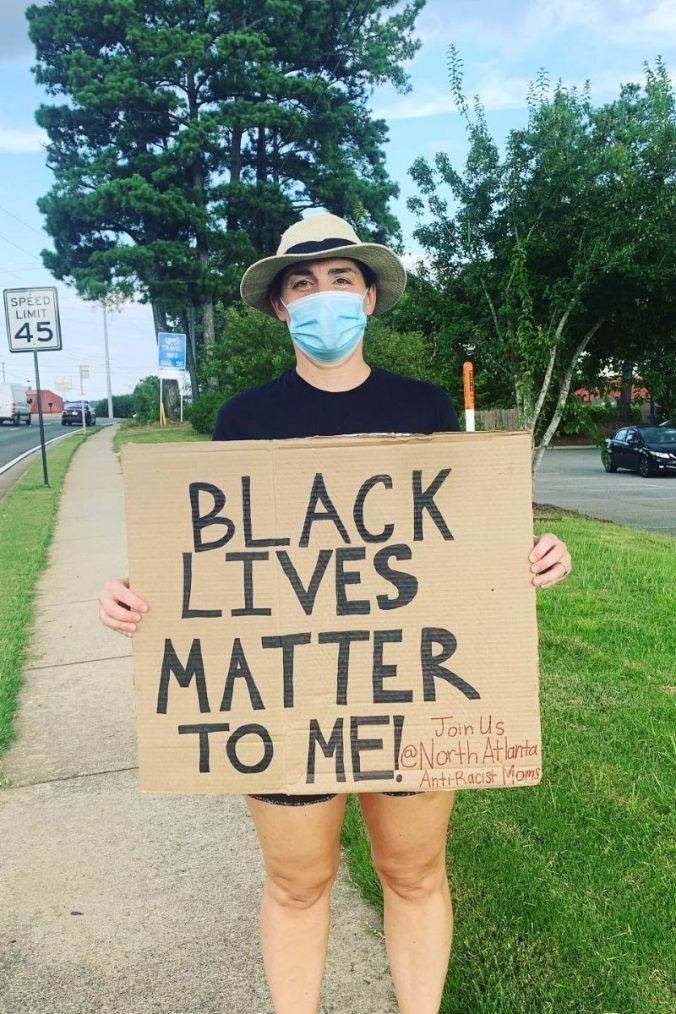
I felt like I needed to use my platform to stand up and speak out against these injustices. I’ve done a few bold things like posting this article on how to raise anti-racist kids.  A group where I live has been protesting monthly and sometimes weekly and I’ve participated as often as I can.

mom holding sign at antiracist moms protest that says Black Lives Matter to me

While those things may be bold, I haven’t done enough.

I still have been ashamed or scared to speak up when I should. I also allow my fears of the ramification of protesting to scare me away from committing to being there every time.

So much has happened in our country over the past year. Most recently the ruthless killing of another Black man who didn’t deserve to die, Daunte Wright.

Relationships have been torn apart as a result, because let’s face it, our country is split on the issue of racism. Nevertheless, I think it’s important for me to continue speaking out and sharing what I’m learning. I have to continue to face the discomfort that comes with this type of work and strive to do better.

So here are a few things that I’ve learned about systemic racism in our country over the past year. The racism that many have to deal with on a daily basis. I’m going to also include a few ways you can be anti-racist, especially if you’re a mom.

What I’ve Learned About Systemic Racism

  • Black, Indigenous, and People of Color who are authors are far too underrepresented in our literature.

I have done a few book studies recently, including Why Are All The Black Kids Sitting Together In The Cafeteria by Beverly Daniel Tatum. Tatum points this out in her book, and until I read it I had never even thought about how few BIPOC authors I actually knew of.

Can you think of any or was it just me? That doesn’t mean they aren’t out there. I think it’s just that we don’t know about them. Have you ever stopped to think about why that is?

  • Minorities are often depicted in stereotypical ways in media.

Think about how many movies and shows you’ve seen with BIPOC as the main characters. How are they depicted? Is it in a negative way?

Since I’ve been more aware of my own biases it’s easier than it ever was for me before to see these things. The more I’ve explored these feelings and allowed myself to feel the discomfort that comes up, the more comfortable I become in standing up and speaking out against them.

  • We need to be careful of what we say.

For example, someone recently posted this article in an online group that I’m in.  Author Elizabeth Sherman points out that saying things like “my tribe” is offensive to American Indians.

“A tribe isn’t your squad of friends, and deeming it as such erases the battles these actual tribal communities fought to be federally recognized.”

Once you start to become more aware of terms that can have racial undertones, like chief and spirit animal, you will start noticing them daily.

I challenge you to stop yourself. Find another word that says the same thing. If you forget, it’s ok. It takes time to change a habit, but don’t continue doing it without acknowledging that it’s wrong. Apologize if you said it in front of someone else and point out that you shouldn’t have said it.

  • Meet people where they are.

Another way that you can be more actively anti-racist is to meet people with different opinions and beliefs than you where they are. Just because you disagree with someone, doesn’t mean you should come at them on your soapbox. Making someone feel guilty about why they’re wrong won’t get you far.

All that will likely do is make them even more defensive and dig their heels into what they’ve already said or thought. Instead, try to understand where the inappropriate behavior or opinion is coming from.  Rather than arguing with them, ask why they think that way and become genuinely interested in their answer.

You have to understand that there are layers upon layers upon layers of generational biases that these behaviors and words are coming from. Engaging in arguments doesn’t get you very far. But understanding from a place of love and compassion will get you much further.

It’s like that saying goes, you kill far more bees with honey. I am well aware that my beliefs are not the same as everyone in our country and that’s OK. I believe God actually made us all different for a reason. He didn’t want us to all be the same.

  • Listen to Black voices.

This is probably the most important tip I can give you. I mentioned it in my previous post about raising antiracist kids, but I think it’s necessary to say it again. You can listen to Black voices in many ways like blogs, podcasts, and books. Ideally, you would have personal friendships where you can have honest and open conversations about what needs to be done to be their ally. That being said, just because you have friends who are Black, doesn’t mean that you are antiracist. That is only just the beginning.

These are a few things that I’ve noticed over the past year as I’ve set out on this journey to being anti-racist. I know that this will always be a work in progress for me and I have so much more to learn.

25 resources for moms on being antiracist with moms hugging

Resources To Promote Diversity And Antiracism

As promised, here are some resources that I’ve found helpful while exploring my role in helping to fight racial injustice and systematic racism.

First, these children’s books all include BIPOC as the main characters. I recommend ordering some of these for your family or checking them out from your local library.

The more we can support these authors and show the publishing companies that they are needed, the more likely they are to get published. Not only should Black children see themselves in books, I also think it’s important for White children to see BIPOC as characters in the books that they read.

10 Children’s Books With Diverse Characters

This post contains affiliate links. That means that we earn a small portion of qualifying sales at no extra cost to you. 

The Hula-Hoopin Queen by Thelma-Lynn Godin

What If by Samantha Berger illustrated by Mike Curato

Pepper Zhang by Jerry Zhang

Honeysmoke by Monique Fields

Skin Like Mine by Latashia M. Perry

Listening To My Heart by Gabi Garcia

I’m Mixed by Maggie Williams

Antiracist Baby by Ibram X. Kendi

From The Desk of Zoe Washington by Janae Marks


The ABCs of Black History by Rio Cortez

5 Black-Owned Bookstores To Support

Medu Bookstore in Atlanta, Georgia

Medu Bookstore has been operational in the Atlanta area for more than twenty years and specializes in culturally significant and often hard to find books. They have a list of special events on their calendar that includes lectures by Black authors and storytelling children’s books.

Good Books in Atlanta, Georgia

Good books was founded by a mother-daughter duo who want to show their love to their community and encourage a love for reading. They are based out of Atlanta, Georgia but are currently 100% online. They ship to all 50 states in the U.S.

Cultured Books in St. Petersburg, FL

Cultured Books is a pop-up children’s bookstore, with a mission to first foster a love of self by showing positive images and sharing great stories about people of color. To show children our stories don’t begin with struggle and second, to broaden world views. They host story times, book clubs, and even community events.

The Listening Tree in Decatur, Georgia

The Listening Tree is a children’s bookstore and education center who’s mission is to perpetuate a love of literacy and learning in the global community. The have a Young Entrepreneurs Program committed to bringing economic justice through proper education in Finances, Self Interest and Business Start-up.

All Things Inspiration Giftique in Mableton, Georgia

All Things Inspiration Giftique is a Christian bookstore that sells a carefully curated selection of Bibles, Christian Literature, Fiction, and Nonfiction titles, African American Literature, and more.

Adult Books About How To Be Antiracist

I think learning more about your own biases is the best place you can start if you want to be anti-racist. There is so much more to it, but you have to start somewhere. If you don’t face your racist beliefs you will never be able to make the changes that are necessary. There are many different books out there to help you on this journey. These are only a few that I have begun reading. If you have more to add to this list, I’d love for you to share them in the comments.

1.  How To Be An Antiracist by Ibram X. Kendi.

Last year I listened to a live panel that Ibram did on YouTube with the Prince George’s Memorial Library about his book How To Be An Antiracist. I learned more about systemic racism and how to go about fighting it in that hour than I have anywhere else. He is very easy to relate to, kind, compassionate, and will keep you wanting to read more.

2. Be The Bridge by Natasha Morrison

I referenced this book previously when talking about how I had never really considered the fact that we don’t often hear about Black authors. Since I was a part of this book study, it has become clear to me how little we celebrate BIPOC’s success.

If you truly believe that all people are created equal, why wouldn’t there be just as many success stories about Black people who have written books, movies, or plays than White? Maybe it’s because I haven’t been looking for them. Or maybe it’s because

3. Me & White Supremacy: Combat Racism, Change the World, and Become a Good Ancestor by Layla Saad

4. Why Are All The Black Kids Sitting Together In The Cafeteria? by Beverly Daniel Tatum

5. White Fragility by Robin DiAngelo

6. This Book is Anti-Racist by Tiffany Jewell and Illustrated by Aurelia Durand

7. Black and White: Dismantling Racism One Friendship at a Time by Teesha Hadra and John Hambrick

8. Caste: the Origins of Our Discontents by Isabel Wilkerson

9. Let Love Have The Last Word by Common 

This book is not necessarily about being anti-racist, but it’s about musical artist and actor Common’s journey to understanding love and how it can help build communities.

10. The Color of Compromise by Jamar Tisby

There is still so much work to be done in eliminating systemic racism, and these resources are not exhaustive. But I hope they at least give you a starting point about how to be an antiracist mom.

I’d love for you to add your own resources to this list by commenting below!


The Rise Of Anxiety In Kids

You might not be surprised to hear that the rate of people who are experiencing anxiety has increased over the past year. It’s not hard to imagine why this would be the case given the uncertainty we’ve all been facing.

What I hadn’t considered is how much it has affected our children. The National Center for Biotechnology Information recently published a study conducted in China. The study showed symptoms of anxiety in kids increasing by 15.79% from 2019 to 2020.

Even though kids are less likely to get COVID they are still feeling the stress of it, like the rest of us. I do believe that kids are resilient, but I also think they’re feeling anxious more than we realize.

When I heard this, I started thinking about some of the challenges we’ve been facing in our house.

Sleep Regression

For example, my son has been waking up in the middle of the night more often over the past few months. He comes in our bedroom saying that he’s scared and ends up sleeping with us. While this could be attributed to a number of things, part of me wonders if it’s related to the pandemic. He’s also regressed a little bit and gone back to showing some symptoms of separation anxiety.

He doesn’t want to go upstairs in our house without an adult. Some separation anxiety is typical for young kids, but he had kind of grown out of that before the pandemic.

He used to feel comfortable going anywhere in our house as long as his older brother was with him.  Now he waits on the stairs for me to go with him even to grab something from his bedroom.

Using Art To Talk About Feelings

As a former play therapist, I’m always thinking about ways to get my kids to use art or play to show me what they’re feeling. When I recently attended a training on childhood anxiety, I was reminded about how kids need things to be tangible.  They don’t always have the language developed yet to tell you how they’re feeling. So giving them a way to show you what they’re thinking or feeling gives them what they need to communicate that with you.

When I asked my son the other day to tell me why he didn’t want to go in the bathroom without me, he said it was because he was afraid of monsters.  Instead of saying, “But you know monsters aren’t real,” I asked him to tell me more about it.

He wasn’t really able to tell me what the monster looked like, but I could tell he was trying to describe it. He paused for a moment and said that it was hard to describe. Then about 5 minutes later, he told me that it wasn’t a monster it was a bug.

I asked him if he could draw a picture of it, but he said he didn’t want to. I didn’t push him too hard, because I knew that wouldn’t help. So we talked about how he knows Taekwondo and he can fight any monsters that come around.

I also reminded him that if there are any bugs in our house, they are probably going to be tiny and he’s so much bigger than them. He kept asking me questions about bugs over the next few days. Anytime he did I answered them of course. The cool thing that happened was he slept through the night for a few days.

I also asked my other son to draw a picture of something he worries about. He doesn’t want me to share his picture, and I’m going to respect that. I was surprised to find out what he drew though and was able to give him some reassurance.

Name It To Tame It

What I’ve learned about anxiety is that talking about it doesn’t make it worse. In order to learn to manage it, you have to understand what’s causing it. That means figuring out what is causing the fear or worry, and then learning how to cope with it.

Prior to going back to school in October, my kids had been at home with me all day every day for 7 months. We weren’t really going anywhere and spending much time with friends. So naturally, they were more comfortable at home with me. It would be normal for going back to school face to face to trigger some anxiety for them.

The New Normal

Then when they did go back to school in October, there were all these new rules. Changes had to be made to keep everyone safe and school doesn’t look like it used to. Their old routines have been disrupted. Now they have to wear masks and sit further apart from their friends. Some of their friends aren’t even in the building!

My kids told me about a really cool game they play at recess where they use a pool noodle for tag. Instead of tagging each other, they touch them with a pool noodle. Even though this isn’t a negative thing, it’s still something different that they have to adjust to. They’re also only allowed to play with kids in their class at recess in a certain section of the playground. Every other year, they could play wherever they wanted and with kids from other classes in their grade.

To make matters worse, my kids have heard the grown-ups in their life talking about COVID and how many people have gotten it. Despite how much we’ve tried to protect them from the bad news, I’m sure they have overheard us talking about it.

The more you think about it, the more obvious it is why kids are more anxious.

We also have to remember how literal kids’ thinking is. It’s very black and white. So if your child hears you talking about how many people have died from COVID, it wouldn’t be unusual for them to automatically think their parents might die if they get it.

This is another reason why we need to be careful about what we say in front of our kids. I’ve tried really hard to remind my kids that even if mommy or daddy get COVID, we’ll probably just get sick. We’re healthy and we don’t have any pre-existing health conditions. But it’s not that easy for kids to make that connection if you don’t reassure them.

My Anxiety Monster

I also did the art activity that I referenced earl myself. I was surprised what came to my mind when I started drawing my anxiety monster. What I thought of when I was drawing it is how stressed and tired my anxiety makes me feel sometimes.

I started drawing my monster to be an old person with crazy hair, but then had a memory about when I was a kid and watched the movie Signs. There’s a scene in that movie where an alien crosses across the screen briefly. That part always freaked me out!

My anxiety looks like a green alien with his hands in the air

I think that drawing my anxiety monster brought out some fears that I have been trying to avoid thinking about for a long time! When I was a kid, I remember being afraid that aliens would come and abduct me in my sleep. Luckily I no longer have that fear, but apparently it’s still something that comes up for me sometimes!

The uncertainty and constant changes we’ve been facing over the past year have led to added stress for all of us. Some people may be better at hiding it than others, but I think it’s safe to say we’ve all been affected in one way or another.

I’ve personally been pretty proud of how well my kids have adjusted and adapted to all this uncertainty! Our school has gone back and forth from virtual school to in-person multiple times this year. Some weeks that change has come unexpectedly, and everyone has had to quickly adjust.

Thank goodness kids are resilient.

At the same time, that constant need to adapt and change their routine has been hard on them! So no wonder the rate of childhood anxiety is going up.

The good news is that there is hope. Taking time to talk to your kids about how they feel and empowering them to cope with their fears can help.

Strategies for managing anxiety in kids

Strategies For Managing Anxiety In Kids

This post contains affiliate links. As an amazon affiliate partner, we receive a small commission on qualifying purchases at no extra cost to you. 

Books

There are tons of books that can help you start a conversation with your child about what’s causing their anxiety. Here are a few of my favorite:

My Monster and Me by Nadiya Hussain

Penelope Perfect by Shannon Anderson

Wilma Jean the Worry Machine by Julia Cook

Jonathan James and the Whatif Monster by Michelle Nelson-Schmidt

Worry Says What by Allison Edwards

Ruby Finds a Worry by Tom Percival

Workbooks

These are great workbooks for parents to do at home with their kids.

  • Worry Wars: An Anxiety Workbook for Kids and Their Special Adult by Paris Goodyear Brown

  • What To Do When You Worry Too Much: A Kids Guide To Overcoming Anxiety by Dawn Huebner

Art Activities

  • Worry Stone: When my son was having issues with anxiety about going to school last year his school counselor gave him a strategy that really helped him! She gave him a worry stone that he kept in his pocket and could hold when he was starting to get upset. He carried it everywhere and it really helped him a lot!
  • Worry Pet: Here’s a really cool similar strategy. If you’re feeling crafty, you and your child can make a worry pet. They can use take it to school to remind them to use their calm down strategies when they’re feeling anxious. It also helps them know that they have something friendly in their bag in case they need it.
  • Homemade Play Doh: You can make play doh with your kids and add soothing essential oils like lavender. Playing with play doh is a great way to pound out your frustrations or stress! Here’s one recipe for Calming Homemade Playdough by Brandi Brown.
  • Worry Worms– This is a great way for your child to tell you about what their worries are without even realizing it. It’s adapted from Paris Goodyear Brown’s book Worry Wars and an activity I used often with my play therapy clients. All you have to do is make worms out of construction paper and hide them around your house. Every time your child finds a worm, they have to tell you something they worry about. It’s an easy way to get the conversation about anxiety going with your child.

Mindfulness Activities

  • Here are 40+ Mindfulness Activities by fellow mom blogger Alice at Mommy to Mom. She breaks them down by age and even has some ideas for teaching mindfulness to your babies!
  • We love doing Cosmic Kids Yoga on Youtube. There are some really fun videos like Pokemon,  Minecraft, and Harry Potter that are great for little boys. They have tons of different ones for every age and interest though.
  • Calm Down Glitter Jar: This article from Kumarah Yoga teaches you how to make a calm down glitter jar. Depending on how flexible their teacher is, this is another strategy that your child could use a school.

Hopefully these strategies will help you and your child manage anxiety better. I have a few more strategies included in my previous post 8 Tips for Helping Kids with Back to School Anxiety.

If your child is experiencing anxiety or worry to the point where you feel like it’s beyond something you can help them with please make sure to seek professional help.

If you’re unsure if your child is anxious, here are a few common symptoms of anxiety in kids to look out for:

  1. Difficulty sleeping or frequently waking up in the middle of the night (after already sleeping through the night).
  2. Frequent stomach aches without an underlying medical reason.
  3. Clinginess to parents or becoming really upset when having to separate from caregiver.
  4. Explosive outbursts- this can sometimes be misinterpreted as misbehavior.
  5. Difficulty sitting still and/or constantly fidgeting.

These aren’t the only indicators that a child is anxious. Sometimes it can be hard to know if a child is struggling because many of the symptoms above can also be normal depending on their stage of development. Check out this article on Child Mind Institute for their advice on when to worry about an anxious child.

Calling your child’s pediatrician is always a great place to start. You can also find a registered play therapist on the Association For Play Therapy’s website here.

This post contains affiliate links. As an affiliate partner, we receive a small commission at no extra cost to you. 

Nerf Darts & Dirty Socks

Everywhere I look there are nerf darts and dirty socks. They’re in between the couch cushions, wedged under every piece of furniture, and jammed into every corner of my house. I swear I could probably spend all day picking up the tiny little pieces of neon orange foam and still not get all of them.

To make matters worse, at some point over the last year my husband decided to buy a giant box of like 500 more of them. I have no idea what he was thinking. It must have been a pandemic induced state of psychosis. Clearly he thought it was necessary to bring his nerf game to the next level. But did he even consider how much extra work it would be to clean them all up?

Don’t get me wrong, I love seeing how much fun my boys have getting into these nerf gun wars. They love it anytime their dad plays with them, especially when he chases them around the house. Even though it always inevitably ends with someone crying because they got shot in the face.

The Aftermath

But somehow when the war is over everyone magically disappears. Then I’m the one left to pick it all up. I know, I know, I could force my kids to help clean them up, but have you ever actually made a 6 year old pick up their toys? It’s pretty excruciating. I’d even say that I might enjoy going to the dentist more than suffering through more than 10 minutes of it.

Let’s not forget about all the dirty socks I’ve been gifted with over the years. On top of being squished up into tiny little balls and somehow strategically placed in every room of the house, they’re also super stinky! Do boys not have a sense of smell? If that was the case, things would actually make a lot more sense.

On top of the dirty socks and nerf darts, there’s the endless crumbs under the kitchen table, toothpaste smeared all over the bathroom sink, and couch cushion forts in the living room.  There isn’t one room in our house that hasn’t been taken over and destroyed by the kids.

Excuse The Mess We Live Here

Embrace The Mess

Let’s face it though, it comes with the territory. Once you have kids, your house will never truly be clean again. Not for long anyways. Even if I do spend all day getting it spotless, as soon as they get home the mess will instantly reappear.

Just like I’ll never win the war on laundry or dishes, I’ll never be able to pick up all the nerf darts. I have learned a few tricks, like threatening to give everything that doesn’t get cleaned up to charity. They work sometimes, but not without lots of tears. Sometimes we can motivate the kids to clean up when it’s time for them to get paid their monthly allowance. Nothing works better than bribing them with money.

We usually just end up cleaning like crazy before someone comes over. Honestly though, I’d rather have friends that don’t care if the house is messy when they come over. Those are the best friends in my opinion.

In reality, I have to let the mess go. Because if I’m going to let the mess bother me, I’m probably going to spend my whole time as a mom being bothered. That would take all the fun out of being a mom!

Follow us on Instagram or Facebook so you don’t miss our next post.

Here's why moms should embrace the messThis post contains affiliate links. As an affiliate partner, Mom Life With P earns a small portion of qualified sales at no extra cost to you.

8 Things To Say To Someone Who Is Depressed

If you’ve never actually been depressed yourself, it can be hard to know the right thing to say to someone else who’s going through it. But that doesn’t mean you can’t help.

Sometimes when I go through periods of depression everything just feels so hard. It can be a struggle to do little things, like going to the grocery store to buy a carton of milk. Every little thing can feel so overwhelming and huge. Sometimes when my depression gets really bad, all I want to do is sleep. This can go on for days. Fortunately though, or maybe unfortunately- when I get like this I know it’s going to get better, because I’ve been through it before.

Hope Shines Brightest In The Darkness

It’s not always easy, but I can usually see the light at the end of the tunnel. Sometimes it feels so far away and sometimes it does take time to get there. I’m not sure how much easier that really makes it, but it does give me a small amount of hope. And when my depression gets really bad, any tiny little bit of hope is enough to get me through to the next day.

Offering hope is important when someone is depressed

I was going through a dark period like this last week. I’m not sure what exactly it was that helped me climb out of it, but I did. Maybe it was buying myself a really expensive pillow, or maybe it was going for a run on a beautiful day by the river. It could have been the friend I reached out to who said what I really needed to hear. Maybe it was the fact that I was able to get an appointment to see a psychiatrist so that I can hopefully get on the right medication. I’m sure it was actually a combination of all these things, but after I reached out to that one friend it felt like a turning point for me.

She was the cheerleader that I needed to get me out of my funk. 

I’ve noticed how hard these episodes of depression can be on my family. And I can see how helpless they feel when they don’t know what else to do to help and they don’t feel like they know the right words to say. I’m sure other people feel the same, so I wanted to share some things that people have said that helped me. So that you can be the cheerleader that your loved one needs the next time they’re struggling.

8 THINGS TO SAY TO HELP WHEN SOMEONE IS DEPRESSED

1. It’s going to be ok.

2. I may not understand, but I’m here for you.

3. You are not alone.

Depression can feel SO isolating, but knowing that you don’t have to go through it alone can make a huge difference.

4. You matter to me.

5. Let’s go for a walk.

Get them out of the house. Being stuck inside is not good for someone who is depressed. 

6. You are strong enough to get through this.

7. Even though you’re going through this, you are still a good mom.

Mom guilt is bad enough on a regular day, but when you’re depressed you feel like you’re not good enough. You get into a spiral of negative thinking and then of course you feel like a horrible mom. Check out my previous post here for some tips on getting through mom guilt.

8. It’s ok to not be ok.

These are some of the things you can say to help someone who is depressed. But in the end, showing that you care is what matters most.

If someone you know is struggling with depression, help them get the help they need. They don’t have to suffer! Psychology Today is a great resource for finding therapists in your area or they can always talk to their primary care doctor.

Maybe there’s someone you know who you think might be depressed, but you’re not really sure. Here are a few signs and symptoms of depression that might help you decide whether or not you should talk to them about it.

COMMON SIGNS & SYMPTOMS OF DEPRESSION

  • They stop wanting to hang out as much as usual.
  • Avoiding your calls or texts.
  • Frequently canceling plans.
  • Their mind seems to be somewhere else.
  • Constantly focusing on the negative.
  • Having a hard time getting things done at work, school, or around the house.
  • Has lost interest in doing things they normally do.
  • Doesn’t want to get out of bed and/or thinks about going back to bed when they wake up in the morning.
  • Headaches and muscle pain or other physical symptoms without a medical reason.
  • Sudden weight loss or gain.

Here’s an anxiety and depression checklist that might help you decide if you should be concerned. The National Alliance on Mental Health (NAMI) also has great resources including free online support groups.

If you’ve ever struggled with depression, what’s something that someone said that helped you?

pinterest 8 things to say when someone is depressed

This post contains affiliate links. As an affiliate partner, we earn a small commission on qualified sales at no extra cost to you. 

RELATED POSTS

Living With Anxiety And Depression In Times Of Extreme Uncertainty 

You Are Loved

My Anxious Life


More Than Just A Mom

Have you ever felt like you didn’t know what to do with your life? If you’re a mom I’m sure you’re probably always busy. You have a never-ending list of things that need to be done like housework, grocery shopping, giving your kids attention, and trying to find time to exercise. Or you’re working a 9-5 job, but you just aren’t feeling fulfilled. Maybe that’s because you haven’t asked yourself the right questions to help you with finding your passion.

My inspiration:

I personally always thought I knew what my purpose in life was, but when I became a mom, it seemed so out of reach. For a long time, my dream was to be a pediatrician. When I was 8 or 9, I got a human skeleton kit for Christmas. I remember spending hours learning about all of the bones- what their names were and where they were supposed to go. Then I’d put the whole thing together and take it apart over and over. I was fascinated!

Seeing the movie Patch Adams inspired me to be a doctor even more. I wanted to be just like Patch Adams and open a clinic for sick kids. It was going to be a place that would be fun and kids wouldn’t be scared to go there. 10 years or so later, I still had that same dream. I started out college as pre-med, but after the first semester, I realized it wasn’t what I really wanted to do. I hated chemistry and biology, and spending the next 7+ years learning about those subjects sounded daunting!

The problem was, I had convinced myself so early on that I had to be a doctor and had no clue what my other options were. I was also ashamed and thought everyone would be disappointed if I gave up on my dream so easily.

Luckily no one really cared!

Besides maybe volleyball, my favorite class at the time was psychology. I easily changed my major and then got my master’s in counseling. After going through multiple losses as a child, and then my dad in college, I realized what I really wanted to do was help people. I wanted to help kids who had experienced loss too. People were always telling me they thought I was good with kids and I really enjoyed being around them. So it felt like working with children in some capacity was what God wanted me to do with my life.

When I first became a mom, I was working part-time at a psychiatric hospital while trying to build a play therapy practice. Juggling two jobs as a new mom didn’t last long and I eventually closed my practice. Not only was I feeling burnt out and exhausted, but I was really self-conscious about the fact I didn’t know what I was doing. I felt like a fraud trying to tell other people how to parent. Honestly, all I really wanted was to be at home with my baby.

Changing Directions

At that time, I started working for an insurance company doing reviews for behavioral healthcare. Even though the job paid really well, I started feeling less fulfilled. That experience taught me that money isn’t everything and reminded me that what I really wanted to do with my life was make a positive impact.

When my 2nd son was born, we decided that the cost of daycare wasn’t worth the long hours and emotional stress my job was causing. So, I became a stay-at-home-mom. I remember thinking how great it would be to not have to “work” anymore. Being a full-time mom and housewife wasn’t all it had been cracked up to be though. We’ve all heard the term, the grass is always greener. It’s so true! Even though the 2nd time around with a newborn was much easier for us, I was always exhausted and constantly waiting for the day to end.

Starting Over

Our original plan had been that I’d go back to work once both our boys were in school.  When that time finally came, I had no clue what I wanted to do! I’d spent all those years in school getting a degree to become a counselor, but I just couldn’t see myself doing it anymore.

I got a part-time job at a church where I worked weekends, but that meant getting to spend less time with my family. Somewhere during that time I started blogging, but I wasn’t spending much time on it. Mainly because I didn’t HAVE any time!

Then my husband encouraged me to quit the job at the church and start writing more. It seemed like it could really be my dream job. The hours would be flexible and I could do two of the things I enjoy- helping people by sharing my experiences and writing.

Little did I know how much it would take to build a successful blog though. Finally now after about 2 ½ years it’s starting to feel more like I’m doing what I should be doing with my life.

Writing about the struggles of being a mom is therapeutic and it also gives me a sense of purpose. When I start to have doubts, I remember that maybe there’s a mom out there somewhere that needs to hear what I have to say. That drives me to make myself keep going.

One lesson I’ve learned is that you can always find a way to do what you love, but nothing in life is EVER really easy. Actually, the things in life that are worth doing can sometimes be THE HARDEST!

Here’s what helped me find my passion:

So many people have helped me figure out what to do with my life over the past 15 years since graduation. They all basically said the same thing, “You just need to find your passion!”

This topic was once a source of frustration and pain, because I didn’t know what I wanted to do. I felt like I’d spent my whole life trying to figure that out! At one point, I thought maybe I was meant to “just be a mom”.  There were times when it felt like I had even lost my identity completely to motherhood. Now I know that for that season of my life, my job was actually to be “just a mom.”

As I approach 40 this year, now I’m realizing that not everyone knows what they want to be right after college. Actually, I think most people change careers at some point, especially moms.

The more I thought about the question “what are you passionate about?” the more I could see that there were actually a lot of things. It took a few years for me to really figure it out, but my goals in life are pretty simple.

They fall into 3 categories:

  • Achieving World Peace
  • Saving the Environment
  • Finding a Cure for Cancer

Ok, maybe they’re not so simple after all. But there are little things I can do that will help make an impact.

I can help moms see that they aren’t alone by sharing my parenting struggles. I can teach my kids how to be more aware of how our actions harm the environment.

Sometimes I think I can help achieve world peace, but then I realize I can’t control how others think or what they do. What I can do is try to be a positive influence on other people.

Now I’m realizing that it’s ok that I struggled with finding my passion at first. At that time in my life, my job actually WAS to take care of my kids. That was the whole reason I became a stay-at-home mom when I did.

So, if you’re like I was a few years ago and just starting to think about what you want to do with your life at 35, you aren’t alone. Finding your passion can be really overwhelming at first! If you can find time in your busy schedule, I encourage you to spend some time thinking about the questions below though. Maybe they’ll help you start to see what you’re meant to do.

Text HOW MOMS CAN FIND THEIR PASSION AFTER KIDS with image of a mom on a computer

5 Questions to Consider When Finding Your Passion:

1) What brings you joy?

What makes you happy and gives you the feel-good vibes? What makes you smile when you think about it? For me, it’s getting outside. I’m at my happiest when I’m outside, especially when I’m near water. Going to the beach or to the river by our house helps me feel calm and it makes me feel more grounded.

When I start to feel off-balance, I try to go outside for a walk or run. It’s not always easy with my kids’ busy schedules, but my husband knows that it’s something I need to do in order to stay sane!  Here are some other ways I stay balanced as a busy mom. 

2) What drives you to wake up in the morning?

Besides your alarm, what are the things that motivate you to crawl out of bed instead of hitting snooze all day? For many people the answer is money and for moms, it’s usually our kids. We usually don’t have a choice but to wake up and make them breakfast or to make sure they aren’t going to burn the house down.

Try to think about it differently though. If you had all the time and money in the world what would you want to spend your day doing?

3) What do you want to learn more about?

What are you interested in? When you were in school, what were your favorite subjects or the ones you were best at?

4) What do you wish you could do more often?

Again, forget about how busy you are and just think about the things you wish you had more time to do. If this season of your life is too full it’s ok. You can come back to them later when you have more down time.

5) What are the things you care about most?

Are there any causes that you want to get more involved in like rescuing animals or reducing pollution? Once you’ve spent time thinking about these things, find a way to do them more often. Maybe you can volunteer while your kids are in school or on the weekends. Or maybe you just spend time learning more about an organization that interests you.

Do what works for you.

If you don’t have time to volunteer right now, maybe you can donate money or resources to organizations that support these things. For you, it could be that being on a committee or emailing someone who works there to share your ideas.

I’ve been involved as a volunteer in many roles over the years as a stay-at-home mom. Sometimes the most valuable person in a meeting was the person who suggested a fundraiser that we hadn’t thought of. Or maybe they had a connection to someone who we didn’t and were able to start a conversation that we wouldn’t have had otherwise. Even if they weren’t able to see the idea through, there were others in the organization who knew of a group of people who could help.

Sometimes a little help can go a long way too. Part of my job when I worked at the church was recruiting volunteers to help with special events. Without the guy who came to help move heavy boxes for 30 minutes, we would have never been able to put on the Christmas event for our families. You might not realize it, but a few minutes of your time once a quarter can have a big impact.

Maybe you aren’t at the stage of your life where you have time to do what you’re passionate about. Or you might not have any clue how to figure that out right now. That’s ok. Being a mom is an important job too and it may actually be the most important one of all.

If you enjoyed reading this, be sure to subscribe to our email list or follow us on Instagram so you don’t miss our next post!

Finding Joy In The Chaos

Finding joy during the chaos of the holidays can be almost impossible sometimes. It’s easy to get so caught up in your to-do list that you forget the reason you’re celebrating in the first place. 

The song “Have Yourself a Merry Little Christmas” has been playing on repeat in my head. It’s kind of like a slap in the face at times, because there’s a chance this year it really will be just me celebrating by myself. If we’re lucky, we may get to spend time with our immediate family, but it will be a little different. We won’t give each other hugs, and we’ll try to keep 6 feet apart.

There’s also a chance that I’ll be in quarantine in my bedroom if the COVID test I took on Friday comes back positive. It’s more than likely just a bad sinus infection for me, but there’s always that fear that I’ve got the virus.

Since so many other people are in the same boat, the testing sites are overcrowded with multiple hour waits. And test results that might normally be back in 3 days are taking 5. So my anxiety is a little bit ramped up right now. 

Remember last year when I wrote about Managing Holiday Stress? Well on top of all the usual chaos of the holidays, this year we all get to add in more things to worry about. 

For me the added stress is questioning: 

  • Do I have COVID or is it just a bad cold? 
  • Should we get together with our families?
  • If we do see our families for the holidays, what does that look like?
  • Should we order dinner so that we don’t have to worry about making everything and then having to change our plans at the last minute? 
  • Is it safe to travel across state lines?
  • What about that one relative who doesn’t believe in wearing masks, are we going to take the risk and see them?

So yeah, I think it’s safe to say that stress levels are at an all time high for us all.

Despite these things, I truly believe it’s still possible to have a Merry Christmas this year.
A few nights ago I watched the cheesy “chic flick” as my hubby likes to call them, “The Secret: Dare To Dream.” This movie is based on the book “The Secret'”, by Rhonda Byrne. 

The book is about the idea of positive thinking and how each of us has the ability to impact the outcome of our lives with our thoughts. It was a good reminder to me that life really is what you make it. It may seem cliche or hoaky poaky to some of you, but I think that if you believe something in your heart, you really can influence the way that your life turns out.

thinking positively despite others negativity

The thing is, it’s all about perception.

Let me give you an example. I have two boys who are close to the same age (6 and 8). One of them seems to approach most things in life with a glass-half-empty point of view and the other is usually a little more optimistic. 

I told a friend the other day that my oldest is my emo kid. My other son is super laid back and easy going. So when we deliver bad news to both of them, it seems like the older one immediately gets upset and starts to think the worst. The younger one, often responds with things like, “That’s ok. We can still have fun!” 

A change in plans.

We found out last week that my brother, sister-in-law, and their kids won’t be able to come for Christmas this year due to increased COVID cases where we live and potential exposures within our immediate family. We’ve been looking forward to them coming for a few months. We were all optimistic that if we were extra careful, and stayed home the weeks leading up to the holidays they would be able to make it. But sometimes the best laid plans fall to pieces. Understandably, they decided that it’s too risky to travel from Texas to Georgia given everything going on. 

I waited to tell my kids because I knew they would be disappointed. Plus the day I found out they weren’t coming was also the day of their holiday parties at school. They were super excited about being off for the Winter Break and I didn’t want to ruin that. 

The next day, my oldest must have heard our conversations and figured out what was going on. Either that or he put two and two together when playdates started getting canceled, school had to switch to virtual learning, and we started avoiding playgrounds if there were any other kids there. 

So he asked me if his cousins were still coming for Christmas. I had to tell him the truth and give him the bad news. I could see the disappointment in his eyes. So I gave him permission to be sad. I told him I was disappointed too, but told him that it just wasn’t safe to travel right now. He stormed off to his room and started crying. When I went in to talk to him, he said, “This is the worst day of my life!”

Staying Optimistic

My 6 year old walked in a few minutes later and asked what was wrong. I explained that his cousins weren’t going to be able to come for Christmas and his response was, “Oh….Hey mom can you read me a book?” Then he tried to console his brother and said something about how we could still do other fun stuff right? 

Both of my kids had valid responses to the situation and were disappointed, but one reacted with a more positive outlook than the other. Just like moms can also choose how to react to the chaos they may be experiencing right now- The chaos caused by all the uncertainty and fear that we’re facing. 

You can choose to react with sadness, disappointment, and anger. You can choose to get angry about your circumstances and blame others for why things aren’t going the way you hoped. 

Or you can choose joy.

Pinterest image that says finding joy in the chaos

You can celebrate the small things that are going right for your family. Celebrate that you can be together.

Find something small to be thankful for in each moment. It could be that you have food to eat for Christmas dinner. Even if it’s not the usual 5-course meal with all of your relatives. Maybe you can think of the bright side that you and your kids have more time to spend with each other this year rather than traveling from place to place to spend time with all the different sides of your family. 

If you decide to see your family, you can be thankful that you get to spend the holidays with them. And you can celebrate the fact that you’re healthy enough to be together.  

Moms, you can still make the holidays bright for your family this year, no matter what your individual circumstances are. Sometimes it’s hard to see the light in all the darkness, but if you take time to open your eyes you will. It’s there! 

Moving Forward

On that note, I’m going to be taking a few weeks off to reflect on 2020. As much as I just want to forget about this year altogether, it will be good to reflect on the good and the bad. How can I learn from my mistakes and parts of my life I want to improve if I don’t acknowledge them? 

I’m not going to dwell on the past too much though. Since there was so much to be sad about this year, it will be more fun to focus on the future. 

We’re all hoping that 2021 will be a better year. I think it’s looking like that’s entirely possible. Yes, I know the virus isn’t going away, but I have hope. I AM trying to put out positive thoughts that I want for 2021, remember?

What will you focus on this holiday season as we get ready to start a new year? Share in the comments how you’re going to celebrate joy and what you have to be merry about this holiday season. 

Get “The Secret” on Amazon here:the cover of the book "The Secret" by Rhonda Byrne

This post contains Amazon and other Affiliate links. This means that I’ll receive a portion of qualifying purchases made through links on this page at no extra cost to you.

Here’s Why Asking For Help Is So Hard For Moms

Why is it that every self-help article or book for moms reminds us that we have to ask for help yet moms still don’t do it?

For one thing, we all have this mentality that we should be super mom and that we have to do it all. Or at least I do anyway. Maybe that just comes from my competitive nature and the desire to be the best at everything.

I’m working on not comparing myself to others, but that’s hard to do! Especially when sometimes it feels like everyone else around me is happy and I’m not.

To make matters worse, moms are constantly being bombarded with more things to-do.

My To-do List On A Typical Day

“Mom I need more clean underwear! “

Suddenly I remember that I forgot to do that load of laundry before I ran out the door to carpool. Now I set out to move the huge pile of dirty clothes to the basement laundry room, sort it, remember to switch the clean clothes from the wash to the dryer, fold them or at least sort by person, then I can put some underwear in my son’s drawer.

As I’m going through the clean clothes I remember that my 8 year old has had yet another growth spurt and none of his pants from last year fit anymore. I make a mental note to shop online later and order him some more pants. Then I remember that the pants I ordered online last week from brands he usually wears were long enough but too loose in the waist. Maybe I can find some on Ama….I think as my thoughts are interrupted by my youngest son.

laundry piling up because the mom doesn't want to ask for help

“Mom, what are we having for dinner?”

Oh yeah, I’m getting to that, as soon as I finish the laundry. Crap I forgot about the dishes in the sink. As I’m going to the sink I remember that when I did the grocery pick up order this week they were out of low carb tortillas, so I have to run out to the store if we want to have taco night. I didn’t defrost any other meat and it’s 5:30, so that’s our only option.

Husband: “You know we could just get take out. That would be a lot easier.”

But we’ve eaten take out the past 2 nights and I know that’s not good for us. We were just at the pediatrician’s office last week and I had to fudge on my answer when the nurse asked how often we eat fast food per week. Plus it costs a lot of money. And if we want to stay within our budget this month we can’t eat out every single night!

mom on computer with kids climbing on her with text Here's Why Asking For Help Is So Hard For Moms

This is the constant battle moms have to face.

Figuring out how to do what’s best for our kids, but at the same time finding the best work/life balance. Which is another added stressor for many of us moms.

We’re constantly asking ourselves:

  • Do I go back to work full time or do I continue being a stay at home mom?
  • Do I take on more hours at work so we can be in a better situation with our finances?
  • Or do I continue working part-time so that I can be there more for my kids?
  • Maybe I should pick up a “side hustle” so that we can save even more. Plus my friend’s always asking me to join her business selling stuff. Then I could get it for free! (Ahem I’ve tried this one a few times!)

Another reason that we don’t ask for help is that we don’t see other moms doing it very often.

How many times have you seen a friend struggling and said, “let me know if you need anything” only to realize 6 months later that you never heard from them? Then you find out they were struggling a lot of that time and they didn’t reach out. They figured out how to make it through it themselves, or maybe they just didn’t want to ask for help.

Mom who is pretending to be brave and strong like a superhero.

Why is that? It’s not easy to admit that you can’t do everything it takes to be a mom on your own. We all want to show that we’re strong. Or we want to BE strong. We don’t want to admit defeat. Plus we know deep down that all the pressure we’re under is worth having kids. And we know that it’s not going to last forever.

There’s also the mentality for some that all of these things are our jobs as moms. So if we complain or ask for help we sound ungrateful. I personally also don’t really like burdening my friends or family with my problems. I feel like most of the time I created them, so why should I need help solving them?

Or maybe moms don’t like to ask for help because we’re ashamed. If we ask for help then we often have to explain why we need it. Then we wonder if we’re sharing too much about our personal life. This is probably more related to my own social anxiety than anything, but I do think more people struggle with social anxiety than not. Or at least a lot of the moms that I know do.

I know I will survive!

I’m pretty lucky to have some great friends and family who are willing to drop everything and do what they can to help me when I ask.  It’s not always convenient for them, but they will help anyway. They’d rather inconvenience themselves than see me suffer, because that’s what people who truly care about you will do!

I just have to actually ask. Otherwise, they won’t even know that I need help. Most of the time they’re either too busy or too distracted with their own lives. Plus, I do a pretty good job of hiding it when I’m struggling.

So, moms, I encourage you to get past your fears, your embarrassment, and your pride. Talk to your friends and family if you’re struggling. Ask for help. Find a therapist or call your doctor. You don’t have to suffer in silence. There is so much more to life than that! Sometimes all it takes is one call to help you get back on your feet.

If you know a mom who might need to hear this, be sure to share it with her! Sharing is caring!

This post contains affiliate links, which means that I may earn a small commission if you click on the link or make a purchase using the link. This is at no additional cost to you!

The Best Activities For Raising Grateful Kids

Inside: 5 simple activities families can do together to make sure they’re raising grateful kids.

Maybe it’s just me, but I feel like as moms we spend a lot of time thinking about what we don’t have. We think “if we just had enough money to pay for private school, everything would be perfect. Our kids would get a better education and it would set them up to go to college wherever they want.”

Or we think things like “If I had a better job, I could save more money for college tuition for my kids. Then they wouldn’t have to take out student loans like I did.”

We’re always comparing our lives to others– our houses, cars, jobs, vacations. We think if we could just have what they have, we’d be so much happier.

I daydream about how much better life might be for my kids if we had a bigger house with a fenced-in backyard……Maybe my kids would play outside more and they would play less video games.

I think about what it would be like to have a vacation home on the beach. A place we could run off to on the weekends without having to make a reservation 6 months out.

Sometimes I get carried away and let these thoughts consume me so much that I forget about all that we do have:

  • We have a place to live that that has heat in the winter and air condition in the summer.
  • There’s never a time that we have to worry about when our next meal will be.
  • We’re all pretty physically healthy, besides maybe needing to cut back on having dessert EVERY night.
  • We have family living close by that we get to spend time with whenever we want to. Not to mention babysitters almost anytime we need them.
  • Our community is safe and we have plenty of friends who live close by.
  • We have a school that’s actually in our neighborhood. It has the best teachers who genuinely care and want every child to succeed.

I could go on and on once I start thinking about all the things my family has to be grateful for. But the key is making myself think about what we do have instead of what we don’t have.
I want this for my kids too. For one thing, I don’t want them to be spoiled and entitled brats who expect to get everything they want. I also want them to appreciate that we are blessed and that not everyone has a playroom so full of toys that they couldn’t fit one more.

To teach my kids gratitude not only do I have to set a good example by practicing it myself, but I also have to find ways to show them how to be grateful.Give thanks messageNovember is a great time to focus on raising more grateful kids. Since it’s the month we celebrate Thanksgiving, we’re already thinking about gratitude a lot more. Your kids will probably learn about gratitude in school. If not, there will be plenty of shows and movies to choose from that focus on it.

So instead of getting caught up in the hustle and bustle of the holiday, like what you’re going to eat with your turkey and where you’re going to have Thanksgiving dinner, take advantage of this time to practice being more grateful.

This post contains affiliate marketing links. That means as an affiliate, we will earn a percentage of qualifying sales when you click one of these links and make a purchase. 

5 FAMILY ACTIVITIES TO HELP YOU RAISE GRATEFUL KIDS:

1. TALK ABOUT WHAT YOU’RE GRATEFUL FOR

Help your family get into the habit of being grateful by making it a part of your daily routine. Pick a time that’s convenient for all of you to share what you’re grateful for. It could be while you’re eating dinner together at night or during your kids’ bedtime routine. Just try to be consistent and do it at the same time every day.

If you’re having trouble coming up with something to be grateful for, just start small. You can be thankful that you have clothes to wear or thankful that you have food in your fridge to eat.

Sometimes your kids might need you to help them come up with things they’re grateful for too. It’s ok for you to help them! Eventually, it will get easier and they will be more likely to share on their own.

2. MAKE A THANKFUL PUMPKIN

All you need is a pumpkin and a sharpie. Every day, each person in your family can write one thing they’re thankful for on the pumpkin.

Then you can use your thankful pumpkin as a centerpiece and conversation starter at Thanksgiving dinner. Everyone can take turns saying what they wrote and what being thankful means to them.

pumpkins for gratitude activity

3. TEACH YOUR KIDS TO WRITE THANK YOU NOTES

Call me old fashioned, but I love getting handwritten cards in the mail. Writing thank-you notes helps you express your gratitude to others. Besides, I just think it’s the right thing to do.

An easy way to raise grateful kids is to teach them to send a thank you note anytime they receive a gift.

When they’re younger, you can have your child draw a picture on the note and tell you what to write. Once your child can write on their own, even if it’s not perfect, let them! They’ll be practicing their writing skills without even realizing it, and that’s always an added bonus.

a grateful kid holding a thank you note

4. VOLUNTEER TOGETHER AS A FAMILY

Volunteering is a great way to change your perspective and help kids see how much they have to be grateful for.  This time of year, there are tons of great opportunities for your family to volunteer together.

Here are a few ideas:

– Volunteer to serve Thanksgiving dinner to homeless people in your community. Many organizations are already doing this every year and they always need help on holidays.

– Adopt a family and bring them what they’d need to cook their own Thanksgiving dinner. You can make the grocery list together and even go to the store as a family to pick up the supplies. While you’re there, talk to your kids about how other families at their school might not have Thanksgiving dinner without help.

– Organize a canned food drive in your neighborhood. Your kids can help you set up a collection station or make flyers to pass out to your neighbors. Go together as a family to delier what you collect to a local food bank.

– Get creative. Think about what your family likes to do together and find ways to serve your community doing it. Helping others who are less fortunate than you is the best way to teach your kids gratitude. They probably don’t even realize how much they take what they have for granted.

Pinterest image titled 5 Activities For Raising Grateful Kids

5. FIND A GRATITUDE ROCK

It doesn’t actually have to be a rock, but the point is to find something that you can use as a symbol to remind you to be grateful. I like the idea of using a rock because you could easily put it in your pocket. Then when you see or feel the rock in your pocket, it will remind you to be grateful.

Paint or use markers to decorate your gratitude rocks together as a family while you talk about the things you’re grateful for.

These are just a few ideas of things you can do to raise grateful kids. What other activities that teach gratitude have you done with your family? Share your ideas or traditions in the comments!